Preserving an artifact is not only about preventing physical decay—it is also about keeping its story accessible when handling must be minimized, travel is impossible, or restoration decisions require precise evidence. That is why White Light 3D Scanner solutions have become central to Cultural Heritage 3D Scanning: they create measurable geometry and faithful surface appearance in a non-contact workflow. At ZG Technology, we supply metrology-grade 3D scanning solutions—including our GScan full-color white light system—so museums, conservation teams, and cultural institutions can document fragile objects with confidence and build digital assets that serve conservation, research, and public engagement.
What Is a White Light 3D Scanner and How It Works
A white light 3D scanner is a structured-light system that projects controlled light patterns onto an object and captures how those patterns deform across the surface. The scanner’s cameras record the deformation, and the software reconstructs the object’s 3D geometry through triangulation. In plain terms: the projected pattern becomes a precise “measuring grid” that wraps over the object, letting the system compute shape at high speed—without touching the artifact.
Structured light projection: why it captures detail so effectively
Unlike single-point scanning methods, structured light captures a dense field of surface points in each shot. This is especially useful for heritage objects that are rich in micro-features—tool marks, shallow inscriptions, layered paint edges, weathered stone grain, textile weave relief, or subtle deformation over time.
Full-color texture capture: geometry is only half the record
For artifact preservation, color and surface appearance often matter as much as geometry. Pigment variation, patina gradients, stains, restoration fills, and manufacturing traces can be critical evidence. Full-color capture records this visual information and maps it to the 3D mesh, supporting closer study, better communication between stakeholders, and more informative public-facing visualizations.
White light vs. other scanning approaches in heritage work
Heritage teams often compare options such as structured light, laser scanning, and photogrammetry. Each can be valuable, but white light structured scanning is widely adopted for objects where fast, non-contact capture plus texture fidelity are priorities—especially when repeat documentation is needed over time.
Below is a practical comparison for cultural preservation scenarios:
Criteria | White light structured scanning | Laser point/line scanning | Photogrammetry |
Detail on small/medium objects | Strong for fine surface geometry | Strong, especially on geometry | Varies with photography quality |
Full-color texture workflow | Direct, integrated texture mapping | Often available, depends on setup | Strong if lighting/color is controlled |
Capture speed | Fast (area capture per shot) | Slower (point/line accumulation) | Can be time-consuming (photo set + processing) |
Non-contact handling | Excellent | Excellent | Excellent |
Controlled indoor museum workflows | Very suitable | Suitable | Suitable but sensitive to lighting/reflectance |
Repeatable measurement documentation | High repeatability with stable setup | High | Variable unless strictly standardized |
Why White Light Scanners Are Suited for Cultural Heritage Preservation
Cultural objects are rarely “scanner-friendly.” They are fragile, irreplaceable, and often have complex surfaces—glossy varnish next to matte pigment, worn edges next to sharp incisions, or porous stone next to repaired fills. White light scanning addresses these realities with a workflow designed around non-contact capture, surface richness, and practical efficiency.
True-to-life color and texture for conservation records
When the goal is preservation, color is not cosmetic—it is data. Full-color scanning helps teams track changes and conditions over time: fading, cracking progression, surface contamination, moisture staining, abrasion, or the boundary between original and restored areas. A full-color 3D model can also support remote collaboration, allowing curators and conservators to review a single shared reference rather than relying on separate photos, sketches, and notes.
Non-contact measurement for fragile surfaces
Many objects cannot tolerate repeated handling, and some cannot be safely moved at all. A non-contact scanning method reduces risk during documentation. For conservation teams, this can be the difference between a one-time record and a repeatable monitoring program that produces comparable datasets year after year.
Performance on complex surfaces and fine geometry
White light structured scanning is well-suited to surfaces with small relief and intricate geometry—exactly the features that often define authenticity and historical craftsmanship. It supports accurate capture of contours that may be too subtle for simpler documentation methods, which is essential for condition reporting, replication, and structural interpretation.
Key Benefits of Using White Light 3D Scanning in Museums and Archives
Museums and archives work under practical constraints: limited access time, strict handling rules, mixed object types, and the need to produce usable outputs for multiple departments. A white light full-color workflow is valuable because it scales from detailed technical documentation to public-facing engagement assets.
High-resolution detail capture for measurement-grade documentation
With a suitable scanner configuration, institutions can produce dense 3D meshes that preserve fine geometric information. This supports:
Condition assessment and baseline documentation
Measurement and comparison across time
Research into manufacturing techniques and wear patterns
Restoration planning where accurate reference geometry matters
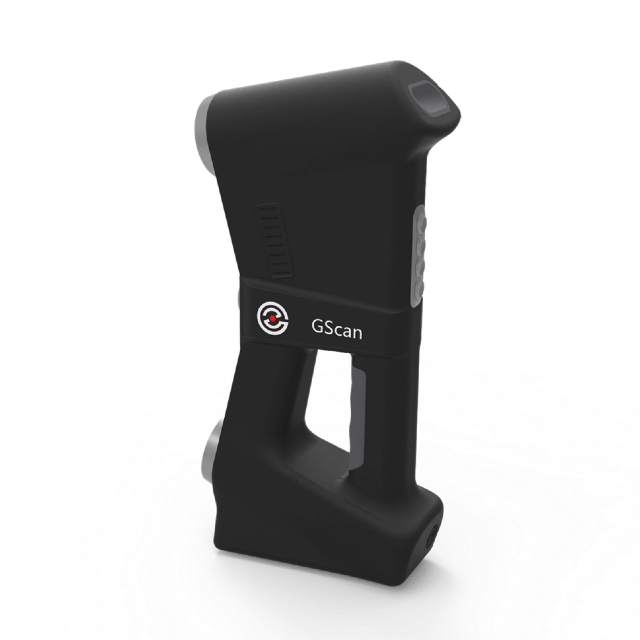
ZG Technology’s GScan system is built around white light raster fringe projection and offers both handheld and fixed scanning modes, allowing teams to adapt to different object sizes and working environments. Its workflow is designed for quick acquisition while maintaining precision and stable color texture capture.
Faster digitization without sacrificing care standards
Time inside storage areas, conservation labs, or restricted exhibit spaces is often limited. White light scanning is an efficient approach because it captures large amounts of surface data quickly. For example, a system with a broad single-scan field can reduce the number of passes required for mid-sized artifacts, helping teams finish capture sessions within the access window while still following careful handling protocols.
Supports exhibition, research, education, and replication
A well-produced full-color 3D model is not limited to the conservation department. It can serve:
Curatorial interpretation and catalog enrichment
Education and outreach through interactive 3D viewers
Accessibility programs for visitors who cannot interact with physical objects
Replication workflows for handling replicas, mounts, or tactile learning aids
Digital preservation to reduce reliance on repeated physical access
Real-World Use Cases: Cultural Heritage 3D Scanning Examples
While every institution has its own policies and priorities, the same use-case patterns appear repeatedly in Cultural Heritage 3D Scanning projects. Below are common examples showing how white light full-color scanning supports the entire lifecycle of preservation and interpretation.
Museum object digitization for catalog and collection management
For small to mid-sized objects—sculptures, ceramics, carved wood, masks, decorative metalwork—full-color 3D models add measurable geometry and detailed surface appearance to collection records. This can reduce future handling because staff can inspect dimensions, surface features, and condition indicators digitally.
Conservation documentation before and after treatment
A structured workflow can document an artifact’s surface before treatment, record intermediate stages, and capture the final condition. Because the result is measurable, teams can compare datasets, identify changes, and maintain a traceable record of interventions. This is particularly valuable when decisions must be justified to stakeholders or when future conservators need to understand past treatments.
Digital preservation of fragile relics and sculptures for public engagement
Some artifacts cannot be displayed permanently due to light sensitivity, security constraints, or environmental requirements. A full-color 3D representation enables high-quality digital exhibits—online galleries, interactive kiosks, augmented reality experiences—while protecting the original. Institutions can also use digital models to create interpretive content that highlights features too subtle to see behind glass.
Replication and 3D visualization for education and research
Full-color scanning supports realistic visualization and, when appropriate, replication. A museum may produce replicas for tactile educational programs, for mount fitting and handling training, or for traveling exhibits where the original cannot be transported. Researchers can use the same datasets for analysis of craftsmanship, tool marks, and form.
Challenges and Best Practices in Cultural Heritage Digitization
Even the best scanner benefits from a disciplined capture workflow. Heritage objects are sensitive, and the goal is not only a “good-looking model,” but a reliable digital record that can be trusted for preservation decisions.
Managing ambient light and reflective surfaces
Structured light scanning performs best in a controlled lighting environment. Strong ambient light, direct sunlight, or sharp shadows can reduce stability of capture and texture consistency. For museum workflows, the practical best practice is to scan in a stable indoor setup with controlled illumination and minimal glare. When surfaces are glossy or metallic, careful positioning and lighting control become more important to maintain both geometry and color quality.
Why post-processing matters as much as scanning
Scan output becomes valuable when it is processed into a clean, consistent asset:
Aligning multiple scans without introducing drift
Cleaning noise while preserving real surface features
Producing watertight meshes when needed for replication
Creating accurate texture mapping and consistent color appearance
Exporting to formats used by downstream teams
ZG Technology’s GScan supports real-time scanning visualization so operators can see scan status and color texture effects during capture, reducing the risk of incomplete coverage and making the session more efficient.
Conclusion
For museums and conservation teams, Cultural Heritage 3D Scanning is most valuable when it captures what matters: measurable form, faithful surface appearance, and a repeatable record that supports decisions without risking the object. ZG Technology supplies full-color white light solutions such as GScan—featuring raster fringe projection, real-time visualization, industrial color cameras, and flexible handheld/fixed workflows—so institutions can document relics and artifacts efficiently while respecting preservation standards. If you are planning a digitization project for fragile objects or need a reliable, non-contact documentation workflow, contact us at ZG Technology to discuss your application, recommended setup, and data deliverables—powered by a structured light 3D scanner approach that prioritizes both detail and care.
FAQ
What makes a white light 3D scanner better for artifacts than contact-based measurement tools?
A white light scanner captures geometry without physically touching the surface, reducing risk for fragile or irreplaceable objects while still producing measurable digital records suitable for conservation documentation.
Can full-color 3D scanning help with conservation condition reporting?
Yes. Full-color data can preserve visible indicators such as discoloration, stains, cracks, and restoration boundaries, improving communication and enabling better comparisons when objects are documented repeatedly over time.
How do museums use 3D models after scanning is finished?
Common uses include digital archives, online exhibitions, interactive education, research collaboration, mount design, and—when appropriate—replication for handling or outreach programs.
What file formats are commonly used for cultural heritage 3D scanning projects?
Many workflows rely on formats such as OBJ or PLY for textured models and STL for geometry-focused tasks like replication. The best choice depends on whether texture, measurement, or manufacturing outputs are the priority.


