In the medical field, the demand for precise, non-invasive methods of documentation and research has grown significantly. This demand is driven by the need for accurate, fast, and efficient techniques that ensure patient safety while providing high-quality data. One such innovation that has revolutionized medical imaging and research is Full-Color 3D Scanners. These scanners are a non-contact, highly efficient tool that enhances the accuracy of medical documentation and research processes, transforming the way healthcare professionals interact with anatomical data. At ZG Technology, we specialize in providing cutting-edge Medical 3D Scanning solutions that utilize non-contact 3D scanning technology to improve diagnostic accuracy and patient care. Let’s explore the benefits and applications of these advanced scanners in the medical industry.
Understanding Non-Contact 3D Scanners in Medicine
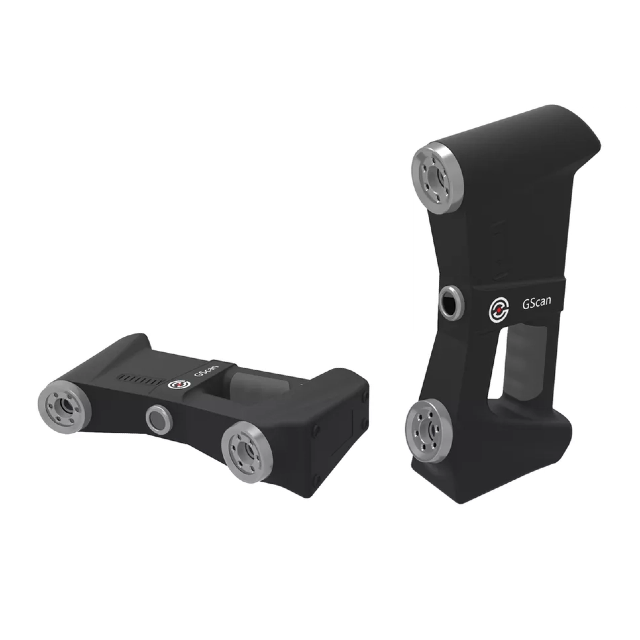
A Non-contact 3D Scanner is a device that captures three-dimensional data without the need for physical contact with the object being scanned. This technology is based on structured light or laser scanning, where patterns of light are projected onto a surface, and the distortion of the pattern is analyzed to generate 3D data. Full-color 3D scanners, in particular, capture not only the geometric dimensions of an object but also its color and texture, providing a rich dataset that can be used for various applications in medicine.
Unlike traditional methods of capturing patient data, such as physical impressions or direct measurement, non-contact 3D scanning offers numerous advantages. It eliminates the need for contact with the patient, making it particularly useful for sensitive or uncomfortable procedures. Additionally, these scanners can gather highly accurate data at a rapid pace, reducing the time spent on documentation and enhancing patient comfort.
In contrast to contact-based methods, non-contact scanning eliminates the risk of patient discomfort, infection, or injury, making it an essential tool in modern healthcare settings. With its ability to capture fine details and ensure the integrity of the subject, this technology is becoming an indispensable part of Medical 3D Scanning.
Benefits of Full-Color 3D Scanning in Medical Applications
The integration of Full-Color 3D Scanners into medical practice has brought about several key advantages that enhance both the speed and accuracy of medical documentation and research.
Capturing Geometric and Color Information
The most significant advantage of Full-Color 3D Scanning is its ability to capture both geometric and color information. This dual capability enables the scanner to create highly accurate, true-to-life representations of the subject. For example, when scanning a patient's skin or organ structure, the color data can help to identify lesions, scars, or other anomalies, which would be challenging to spot with traditional black-and-white imaging techniques.
By capturing this combination of data, medical professionals can gain a more comprehensive understanding of a patient's condition, improving diagnosis and treatment planning.
Faster Scanning and Reduced Patient Wait Time
In traditional methods of medical imaging, patients often have to wait for extended periods for data to be captured and processed. However, with Full-Color 3D Scanning, the scanning process is significantly faster. This technology allows for real-time data capture, which can be particularly beneficial in busy medical environments where time is of the essence.
For example, in surgery or urgent care, where every second counts, the ability to quickly scan a patient’s body part or injury can lead to faster and more accurate decision-making. As a result, patients experience less waiting time and receive timely care.
Improved Clinical Diagnosis, Treatment Planning, and Rehabilitation Analysis
Full-Color 3D Scanning provides a wealth of detailed data that can assist healthcare professionals in various aspects of patient care. In clinical diagnosis, the high-resolution data enables the identification of even the smallest abnormalities, which could be crucial in early-stage disease detection. Furthermore, this data can be used to create personalized treatment plans, as the precise measurements allow for accurate simulation and modeling.
In rehabilitation, 3D scans can be used to monitor progress, assess changes over time, and adjust therapy plans accordingly. This level of detail improves the effectiveness of rehabilitation efforts by offering clear, quantifiable data to track patient recovery.
Applications of Medical 3D Scanning
The use of 3D Scanning for Medical Applications is vast and continually growing. Below are some notable ways in which Full-Color 3D Scanners are being used in the medical field.
Custom Prosthetics and Orthotics Design
One of the most well-known applications of Medical 3D Scanning is in the design and production of prosthetics and orthotics. By scanning a patient’s body part, a highly accurate 3D model can be created, which is then used to design custom prosthetics or orthotics that perfectly fit the patient’s body. This process is faster, more precise, and more comfortable than traditional molding methods.
The ability to create customized, perfectly fitted prosthetic limbs or support braces ensures a higher level of comfort and function for the patient, improving their quality of life.
Pre-Surgical Planning and Virtual Simulations
Full-Color 3D Scanners are also used in pre-surgical planning. By scanning a patient's body or affected area, surgeons can create a virtual model to plan surgeries in advance. This virtual simulation allows them to explore different surgical approaches and choose the most effective one based on the patient’s unique anatomy.
This 3D scanning technology can be used to simulate procedures, predict potential complications, and even train medical professionals in a risk-free environment. As a result, surgeries are more precise, reducing the likelihood of errors and improving patient outcomes.
Medical Education, Virtual Displays, and Simulation Training
3D scanning also plays an important role in medical education and training. By scanning anatomical structures, organs, and tissues, medical students and professionals can study and interact with 3D models in a more engaging and informative way than with traditional textbooks or 2D images.
These digital models can be displayed virtually, allowing students to explore them from any angle and gain a better understanding of the human body. In addition, simulation training can be conducted using these models to practice surgeries or procedures before performing them on real patients, thus improving skills and confidence.
Real Medical Scenarios Where Full-Color 3D Scanners Matter
The benefits of Full-Color 3D Scanners extend to numerous real-world medical scenarios, including:
Pre-Surgical and Intraoperative Data Collection
Before and during surgery, 3D scanning provides a precise and detailed representation of the area being treated. This data can be used for surgical navigation, ensuring that doctors have accurate, real-time information. The ability to integrate this data into surgical systems improves precision and helps doctors make better decisions during complex surgeries.
Burns and Trauma Surface Analysis
For patients with burns or traumatic injuries, Full-Color 3D Scanning provides a valuable tool for assessing the extent of tissue damage. The scanner’s ability to capture both the geometry and texture of the affected area helps healthcare professionals create treatment plans that account for the exact size and depth of the injury.
Pediatric and Sensitive Patient Scanning
Scanning pediatric or sensitive patients can be challenging due to their discomfort with traditional methods. With Non-Contact 3D Scanning, the process is non-invasive and more comfortable, ensuring a positive experience for patients while still providing high-quality data.
Data Integration and Interoperability in Medical Workflows
To maximize the benefits of Medical 3D Scanning, it is essential to integrate the data collected by Full-Color 3D Scanners into existing medical workflows. This includes ensuring compatibility with medical software, 3D printing systems, and design tools.
3D scanning data is typically output in formats such as .stl or .obj, which are compatible with a wide range of CAD software and 3D printers. By integrating this data into the design process, it is possible to quickly create customized medical devices, implants, or prosthetics.
Conclusion
In conclusion, Full-Color 3D Scanners are transforming Medical 3D Scanning by offering non-invasive, accurate, and detailed data for a variety of applications, from prosthetics design to pre-surgical planning. With their ability to capture both geometric and color information, they provide healthcare professionals with a comprehensive view of a patient’s anatomy, improving diagnosis, treatment, and patient outcomes. As these scanners become increasingly integrated into medical workflows, their impact on healthcare will continue to grow, revolutionizing the way we approach patient care. For more information or to explore how Non-Contact 3D Scanning can benefit your medical practice, feel free to contact us.
FAQs
What is a Full-Color 3D Scanner and how does it work?
A Full-Color 3D Scanner captures both geometric and color data to create detailed three-dimensional models of patients or objects. This technology is non-contact and ideal for medical applications that require high accuracy.
How can Full-Color 3D Scanning improve patient care?
Full-Color 3D Scanning allows for accurate, rapid data capture, reducing patient wait times and improving the speed of diagnosis, treatment planning, and rehabilitation.
What are some real-world applications of Medical 3D Scanning?
Medical 3D Scanning is used for creating custom prosthetics, pre-surgical planning, virtual simulations, and more. It is also helpful in analyzing burn or trauma injuries and monitoring patient progress in rehabilitation.
Can Full-Color 3D Scanning integrate with existing medical software?
Yes, the data captured by Full-Color 3D Scanners can be output in formats compatible with medical software, CAD systems, and 3D printing technologies, ensuring seamless integration into medical workflows.


