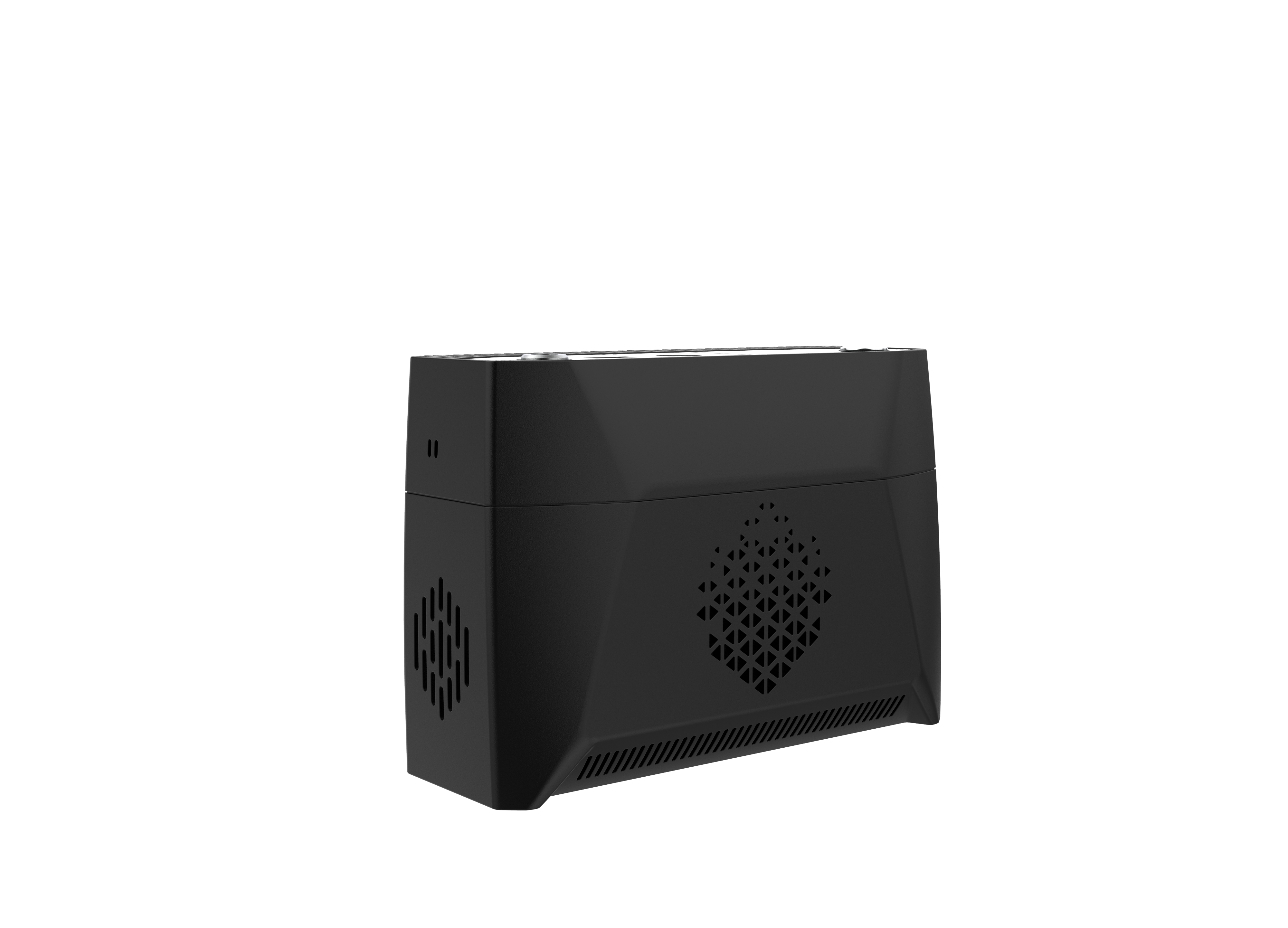
Traditional tethered scanning presents a severe industrial bottleneck across modern manufacturing floors. Heavy data cables severely limit shop-floor mobility and create dangerous tripping hazards. They also restrict critical data acquisition inside tight, confined spaces. Fortunately, a massive technological transition is currently underway. Hardware teams are rapidly moving away from legacy cable-dependent systems. Instead, they are actively adopting edge-computing-enabled wireless architectures. This shift fundamentally changes how you capture complex dimensional data. Our core objective is to guide you through this complex transition successfully. We provide technical leads and procurement teams a clear, actionable evaluation framework. You will learn how to assess a modern Wireless Scanning Module effectively. This guide will help you mitigate common risks related to data latency, signal integrity, and hardware integration. You can then deploy these advanced systems confidently across your facilities.
Key Takeaways
The evolution of wireless scanning is defined by three distinct stages, culminating in the fully integrated wireless scanning module with edge-processing capabilities.
Evaluating wireless modules requires looking beyond ergonomics; critical metrics include point-cloud transmission stability, battery life, and security protocol compliance.
Intermediate solutions like external transmission boxes serve as reliable bridges, but integrated optical tracking modules represent the standard for high-accuracy, large-scale metrology.
Implementation success depends heavily on assessing environmental signal interference and existing IT infrastructure (e.g., Wi-Fi 6/5G readiness).
The 3 Stages of Wireless 3D Scanning
Hardware architecture has evolved significantly over the past decade. Industry leaders track this progression across three distinct phases. Understanding these stages helps you identify where your current equipment stands. It also reveals the logical path for future upgrades.
Stage 1: Tethered Systems with Localized Processing
Older measurement systems rely entirely on a physical workstation connection. Heavy Gigabit Ethernet or USB 3.0 cables tether the device to a powerful PC. The computer handles all complex data processing locally. You face severe operational limitations here. Operators struggle against restricted ranges of motion constantly. Cable management adds significant daily overhead to your workflow. Imagine scanning a five-meter-long turbine blade. The operator must stop frequently to reposition the laptop cart. Furthermore, these setups remain highly unsuitable for large-volume scanning. They also pose severe safety risks in hazardous industrial environments.
Next, hardware developers introduced peripheral transmission hubs. These intermediate devices convert wired scanners into pseudo-wireless setups. A prime example is the ZG FreeBox v2. Such hubs utilize external batteries and dedicated Wi-Fi transmitters. They accept standard cable inputs and broadcast the data stream wirelessly. You gain much better mobility overall. This approach also significantly lowers initial upgrade costs. However, you must accept certain engineering compromises. External transmitters add physical bulk to your gear. They also introduce potential points of failure along the hardware chain.
Modern innovation brings us to fully integrated architectures. Scanners now feature native, embedded wireless computing power. They seamlessly incorporate an advanced Optical Tracking Module. These devices utilize on-device edge computing efficiently. High-end scanners capture millions of surface points per second. Transmitting this raw data over Wi-Fi causes inevitable system crashes. Therefore, the internal processor handles raw data directly on the device. It converts massive point clouds into optimized polygonal meshes before transmission. This local processing completely eliminates network bandwidth bottlenecks. It ensures smooth, uninterrupted data flow to your viewing station.
Architectural Comparison Matrix
System Stage
Data Processing Location
Mobility Level
Primary Limitation
Stage 1: Tethered
Physical PC Workstation
Very Low
Severe range restriction
Stage 2: Bridged
PC via Wi-Fi Stream
Moderate
Added physical bulk
Stage 3: Integrated
On-Device Edge Computing
High
Requires robust IT setup
Core Evaluation Dimensions for a Wireless Scanning Module
Selecting reliable cordless hardware requires rigorous technical scrutiny. You must look far beyond basic ergonomic comfort. We recommend evaluating three critical engineering dimensions.
Data Transmission and Latency Metrics
You must scrutinize data transmission metrics closely. Assess frame-rate drop-offs carefully during active operation. Measure any real-time rendering delays on your monitor. High-density point clouds demand massive network bandwidth continuously. You need robust dual-band router compatibility. Furthermore, IEEE 802.11ax (Wi-Fi 6) support is practically mandatory today. This technology handles dense data streams effortlessly. It ensures smooth visual feedback without damaging compression loss.
Best Practice: Always test latency in your actual manufacturing environment. Laboratory tests rarely simulate shop-floor electromagnetic interference accurately.
Edge-Computing and Tracking Stability
Evaluate the internal processor rigorously. It must handle dynamic referencing and spatial alignment locally. Consider what happens when an operator moves rapidly. The system must maintain absolute accuracy during sudden motions. This becomes critical outside the direct line-of-sight of optical base stations. Robust edge processing prevents catastrophic data loss. The scanner recalculates its spatial position instantly.
Common Mistake: Ignoring local cache memory limits. If a scanner loses its wireless connection briefly, insufficient local memory will corrupt your current scanning session.
Power Management and Thermal Thresholds
Cordless freedom requires excellent power management systems. Continuous laser projection drains batteries rapidly. Look for highly reliable battery swap mechanisms. Hot-swapping capabilities allow continuous multi-shift operation. You also need to check thermal throttling limits. Processing complex geometries continuously generates intense internal heat. High temperatures can slow down edge computing speeds significantly. Top-tier devices utilize advanced heat sinks to maintain peak processing speeds.
Expanding 3D Scanner Applications and ROI Impact
Hardware improvements unlock entirely new 3D Scanner Applications across various industries. Better mobility directly drives daily operational efficiency. It opens doors to previously impossible measurement tasks.
Aerospace and Automotive Metrology
Engineers must protect sensitive class-A surfaces constantly. Dragging a thick data cable across a car hood risks expensive scratches. Untethered tools eliminate this dangerous cable drag entirely. This protects pristine automotive panels and composite aerospace components. You also benefit from dramatically faster setup times. Inspecting a full vehicle or aircraft fuselage takes half the time. Technicians simply walk around the object freely.
Confined Space and Heavy Industry Verification
Standard computer workstations cannot physically follow operators everywhere. Technicians must navigate complex factory pipework daily. They inspect massive casting molds from the inside out. They routinely perform complex reverse engineering tasks inside cramped submarine hulls. Untethered units thrive in these demanding, tight scenarios. The operator requires only the handheld device. This unparalleled freedom accelerates reverse engineering projects significantly.
Scalability via Standardized Modules
Modern architectures support seamless business growth. You can integrate advanced systems like the CereScan SE into wider automated quality control loops easily. Standardized hardware components enable simple modular upgrades over time. You avoid costly full system replacements completely. As wireless technology improves, you simply upgrade the communication module. The core optical sensors remain highly effective for years.
Implementation Realities: Network Risks and Security Compliance
Dropping the physical cord introduces new IT challenges. Factory environments are notoriously hostile to delicate wireless signals. You must proactively address network stability and data security.
Overcoming Environmental Signal Interference
Heavy metal manufacturing environments severely degrade Wi-Fi signals. Steel structures reflect and absorb radio waves unpredictably. Facilities often suffer from dense electromagnetic interference (EMI). Heavy machinery, welding arcs, and large motors generate significant signal noise. You must address these harsh connectivity realities upfront. Ensure your chosen devices include robust failsafe mechanisms.
Pay special attention to local cache storage features. This storage acts as a vital safety net. It protects unmeshed files during unexpected signal drops. The device holds the captured data internally. Once the connection re-establishes, it transmits the buffered data safely. This completely prevents catastrophic data corruption.
IT Security and Data Compliance
Aerospace and defense contractors handle highly classified CAD models daily. Industrial espionage and data leaks pose severe legal risks. You must demand encrypted transmission protocols from hardware vendors. WPA3 enterprise encryption serves as the strict baseline standard today. Unencrypted data streams are unacceptable in modern manufacturing.
Additionally, verify air-gapped network compatibility. High-security internal networks isolate themselves from the public internet entirely. Your scanning equipment must function perfectly without cloud-based authentication. The hardware must handshake securely with your local servers only. This ensures strict compliance with rigorous defense industry regulations.
Shortlisting Logic: Selecting the Right Wireless Architecture
Procurement requires a highly structured and logical approach. Use these specific steps to filter your hardware choices effectively.
Assess Baseline Infrastructure: Evaluate your shop-floor network capabilities first. Do not invest in Stage 3 modules prematurely. Your facility must handle sustained gigabit data loads reliably. Consult your IT department regarding current router capacities.
Match Solution to Workflow: Align hardware capabilities directly with daily tasks. Opt for Stage 2 transmission boxes to extend legacy equipment life. However, prioritize native untethered architectures for net-new procurement. This especially applies to large-volume, continuous assembly lines.
Proof of Concept (PoC) Requirements: Demand rigorous on-site vendor demonstrations. Do not rely solely on glossy marketing brochures. Test the specific boundary limits of the equipment in your factory. Check the maximum operational distance from the base station. Push the highest resolution settings to test bandwidth strain. Monitor the battery drain rate closely over a two-hour period.
Conclusion
Moving to an untethered architecture represents a strategic IT decision. It goes far beyond a simple hardware upgrade. It redefines how your team interacts with large-scale components. True operational efficiency happens when three vital elements align perfectly. You need powerful edge-processing, highly robust tracking mechanisms, and secure data transmission. We urge you to take immediate action. Validate your next purchase carefully. Initiate a technical Proof of Concept (PoC) today. Focus your strict testing on environmental interference and mesh-generation latency. Doing so guarantees a seamless transition into the future of metrology.
FAQ
Q: What is the difference between a wireless transmitter box and an integrated wireless scanning module?
A: A transmitter box serves as an external hardware bridge. It provides battery power and network transmission for legacy wired devices. Conversely, an integrated module features internal edge computing. It processes raw data directly on the device before transmitting it. This internal architecture significantly reduces network bandwidth strain.
Q: Does wireless transmission degrade the accuracy of an optical tracking module?
A: No. Accuracy relies entirely on internal hardware calibration and localized processing algorithms. The network protocol simply transmits the optimized mesh or point cloud. It does not alter the actual spatial measurement precision itself.
Q: How do these modules handle data security in sensitive manufacturing sectors?
A: Enterprise-grade devices utilize WPA3 encryption protocols to secure flying data streams. They also feature local storage buffers to prevent data loss. Furthermore, they support closed-network integration, allowing safe operation within highly restricted, air-gapped facilities.
Q: Can existing tethered 3D scanners be upgraded to wireless?
A: Yes, many legacy systems can integrate with Stage 2 external modules. These peripheral hubs provide cordless freedom effectively. However, you must carefully evaluate the daily trade-offs regarding added physical weight and potential network bandwidth limitations.