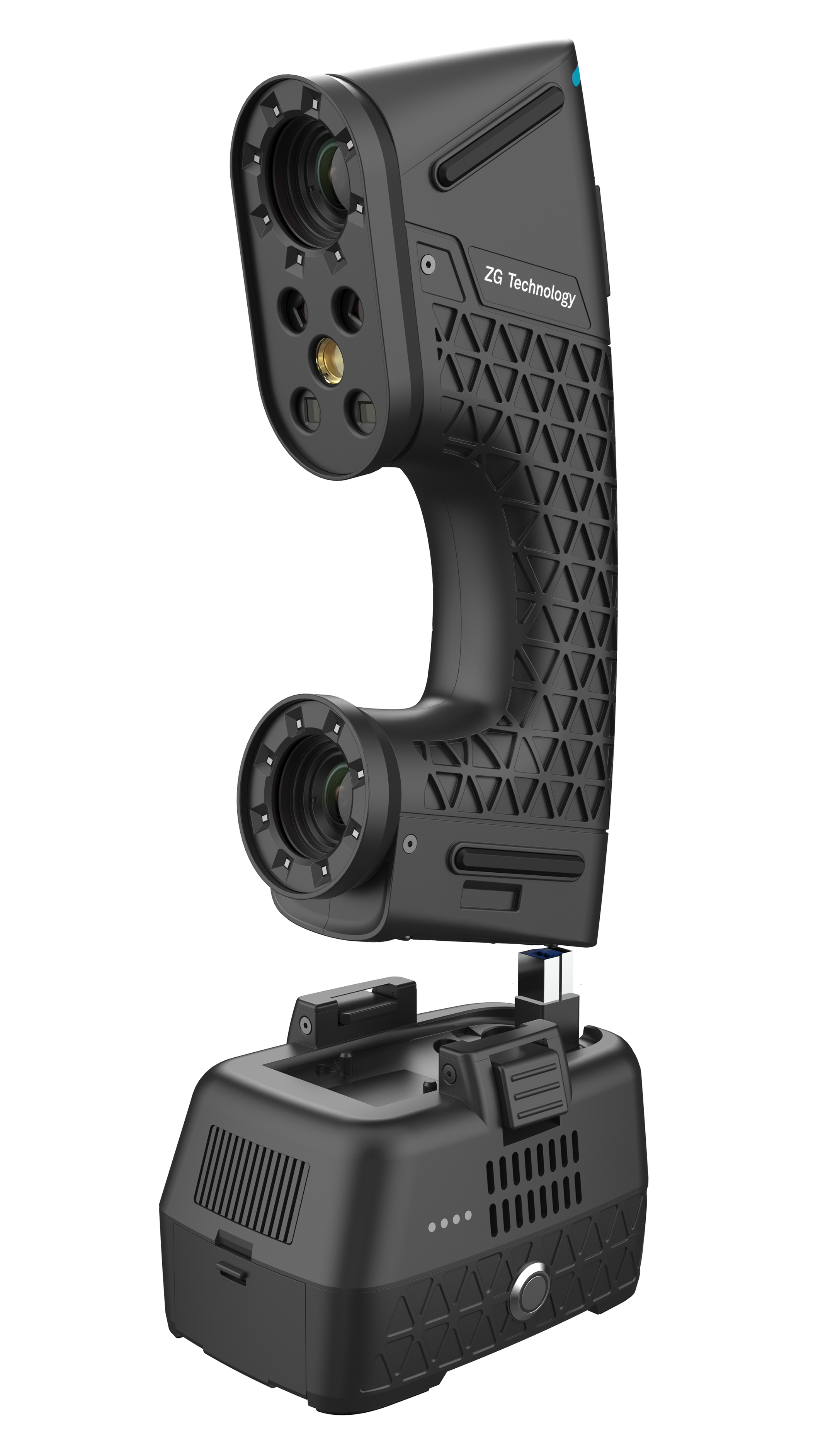
Historically, professionals faced a rigid trade-off in reality capture. You either tethered yourself to a heavy workstation for high-fidelity data, or you chose portable devices and sacrificed essential accuracy. Today's demanding industrial, engineering, and medical sectors firmly reject this compromise. Modern applications require absolute freedom of movement without losing critical point-cloud density. We see a massive shift toward untethered reality capture mobility. The integration of modern transmission technology completely eliminates old bandwidth and latency bottlenecks. Unrestricted movement is quickly becoming the definitive standard for professional environments. However, buyers must know exactly how to evaluate the underlying hardware. You need to look beyond the basic marketing claims. Read on to discover how untethered equipment transforms daily workflows. We will explore the technical specifications you must scrutinize. You will learn how to implement these systems successfully on the shop floor to maximize your hardware investment.
Key Takeaways
Cable-free mobility drastically reduces setup time, operational friction, and user error in complex scanning environments.
The leap from legacy wireless to modern protocols (specifically integrating a WiFi 6 Module) enables lossless, real-time transmission of massive point-cloud data.
Evaluating a wireless 3D scanner requires strict scrutiny of battery workflow, data security protocols, and environmental signal interference.
Transitioning to a wireless handheld scanner yields a verifiable ROI through reduced equipment wear (cable damage) and increased daily scan volume.
The Business Cost of Tethered Workflows (The Problem)
Physical constraints represent the most obvious limitation of wired systems. Thick cables strictly dictate your operational radius. You cannot navigate tight or hazardous spaces easily. Consider the challenges inside automotive interiors. Operators must maneuver around seats and steering columns. A thick power tether constantly snags on floor mats. Aerospace components present similar geometric hurdles. Technicians inspecting turbine blades need complete 360-degree access. Heavy machinery environments pose severe safety risks. Cables easily catch on sharp metal extrusions. These physical limits force operators into awkward, uncomfortable postures. Operators often rush through difficult angles to minimize physical strain. The result is consistently incomplete scan data. You frequently miss critical blind spots.
Operational friction creates hidden daily expenses. Tethered systems require constant physical maintenance. You frequently replace damaged proprietary cables. These replacements cost thousands of dollars annually. Thick wires create serious tripping hazards on active shop floors. Coworkers might accidentally trip over a stretched cable. This pulls the hardware abruptly. Accidental yanks ruin expensive connection ports instantly. Port repairs demand weeks of downtime. These sudden failures halt entire production lines. You lose valuable engineering hours waiting for replacement parts.
Adoption and return rates highlight a deeper issue. Operational complexity is a primary driver of high abandonment. Cable management constantly frustrates new operators. They spend more time untangling wires than capturing data. Restricted movement makes routine tasks feel incredibly tedious. Many enterprise users simply give up. They return the hardware to the manufacturer. Companies invest heavily in advanced metrology equipment. Yet, the operators refuse to integrate it into their daily routines. The friction of the tether outweighs the benefit of the data.
Unpacking the Wireless Scanning Module: Why Now?
Early wireless iterations failed professional engineers completely. Older standards like Bluetooth could not handle massive data loads. Standard wireless networks dropped connections constantly. A high-end scanner generates gigabits of raw structural data every second. Older protocols simply choked on this volume. These limitations caused severe latency on the screen. Users suffered massive compression loss during transmission. The geometric data lost critical edge sharpness. Early adopters faced unbearable lag between physical movement and digital rendering. The technology was simply too slow for practical, industrial-grade reality capture.
The 802.11ax networking standard changes this paradigm entirely. Modern hardware embraces this leap forward. Integrating a robust Wireless Scanning Module completely reshapes the data pipeline. This breakthrough relies heavily on OFDMA technology. OFDMA stands for Orthogonal Frequency-Division Multiple Access. It divides channels into smaller sub-carriers. This significantly increases overall data throughput. It prevents frustrating network bottlenecks entirely. You finally get real-time, high-resolution rendering. The point-cloud appears instantly on your host device. You no longer wait for the software to catch up to your hands.
Edge computing synergy further stabilizes the process. Modern transmission boards do more than just send data. They utilize advanced onboard processing chips. These chips compress raw files securely in real-time. They filter out unnecessary visual noise automatically. This filtering happens before any data leaves the device. Processing at the edge drastically reduces the required transmission payload. This synergy ensures a highly stable data flow. Your connection remains reliable even in fluctuating network environments. You enjoy uninterrupted performance across massive factory floors.
Wired vs. Wireless 3D Scanner: Decision-Stage Breakdown
Let us dispel a persistent industry myth immediately. Going untethered does not inherently mean accepting lower accuracy. Optical sensors dictate the actual measurement precision. The cameras and lasers capture the geometric reality. The transmission module only dictates the movement of that data. It serves purely as a delivery vehicle. Modern setups preserve absolute data integrity. You lose zero sub-millimeter accuracy over the air. The final mesh matches a tethered output identically.
Ergonomics and fatigue demand serious consideration. Capturing large objects takes a massive physical toll. Dragging a heavy cord compounds this exhaustion. An untethered operator enjoys fluid, continuous motions. You maintain a steady physical rhythm around the object. You eliminate tracking loss caused by sudden cable tension. This smooth rhythm yields much better surface data. The operator stays focused on the screen, not their feet. Fatigue reduction directly improves overall project quality.
Compare the daily setup times. Dedicated tethered workstations require serious preparation. You need ten to fifteen minutes just to initialize the area. You must route cables carefully around tripping hazards. You must secure power supplies properly. Untethered systems offer a "power-on and scan" reality. You literally pull the device from its case. You press the power button and begin working immediately. This speed is crucial for rapid quality control inspections.
System Performance Comparison Summary
Evaluation Dimension
Tethered Workstation Workflow
Modern Untethered Workflow
Setup Time
10 to 15 minutes per session
Under 60 seconds (power-on and scan)
Range of Motion
Highly restricted by cable length
Unlimited within network radius
Operator Fatigue
High (dragging heavy cables)
Low (fluid, continuous motion)
Trip Hazard Risk
Severe (cables across shop floors)
Zero
Port Damage Risk
High (accidental cable yanks)
Zero
Key Evaluation Criteria for Wireless Systems
Enterprise buyers must look past basic marketing claims. Evaluating these advanced systems requires strict technical scrutiny. You must verify several critical dimensions before making a purchase. Use the following criteria to evaluate any potential hardware.
Data Security and Compliance: Wireless transmission represents a serious IT vulnerability if ignored. You must treat the hardware as an IT endpoint. Enterprise buyers must verify strict WPA3 encryption protocols. This protects proprietary CAD data from external interception. Secure protocols prevent unauthorized access during massive file transfers. Never deploy unencrypted devices in sensitive aerospace or defense environments.
Battery Hot-Swapping Architecture: Continuous operation is absolutely vital for ROI. A reliable system must feature dual batteries. You need hot-swappable designs to prevent workflow interruptions. You cannot stop mid-scan to charge a dead device. The hardware should maintain power while you swap the depleted cell. This keeps the software session perfectly active.
Range and Latency Metrics: Define your acceptable operational radius early. Compare direct line-of-sight against obstructed environments. Obstacles like metal racks degrade effective range. Demand transmission latency below ten milliseconds. You need immediate visual feedback on the scanning software. High latency causes tracking errors and overlapping data alignment issues.
Integration and Modularity: Decide between a natively untethered device or an add-on approach. Some buyers prefer dedicated retrofits. An external transmission unit can attach directly to existing high-end wired scanners. This modular approach preserves previous hardware investments. It upgrades legacy equipment without requiring a full system replacement.
Implementation Realities and Mitigation Strategies
Industrial zones present incredibly unique network challenges. Heavily metallic environments create a strong "Faraday cage" effect. Factories and shipyards actively disrupt standard Wi-Fi signals. Massive steel structures bounce radio waves unpredictably. You must employ specific mitigation tactics here. Use dedicated direct ad-hoc networks. Connect the hardware straight to the workstation PC. Avoid relying on broad facility-wide routers. A direct link bypasses factory network congestion entirely.
Consider the hardware weight trade-offs carefully. Adding batteries increases the baseline weight of the unit. Transmission boards also add a few extra ounces. You must evaluate this against the ergonomic freedom gained. Dropping a heavy, drag-inducing tether cable usually offsets this slight weight increase. The weight shifts directly into your hand. However, the total drag on your arm decreases significantly. Better weight distribution often makes the device feel subjectively lighter.
Operator training requires a minor but necessary shift. Users must learn new daily habits. They need to manage battery charging cycles actively. Operators should monitor signal strength indicators on the UI constantly. These small behavioral changes prevent unexpected downtime.
Best Practice: Always keep a minimum of two fully charged spare batteries on the workstation dock.
Best Practice: Train operators to recognize latency spikes early. They should step closer to the workstation if the signal indicator drops.
Common Mistake: Leaving batteries fully depleted overnight degrades their overall lifespan rapidly.
Conclusion
Untethered reality capture is no longer a beta technology. It stands today as an enterprise-ready solution. Advanced transmission boards power this new era perfectly. They eliminate the compromises of the past.
Advise your purchasing team to prioritize stable data transmission. Look closely at power management architectures. Ignore superficial feature lists entirely. Focus on what actually keeps the device running on the floor.
Test these devices properly before buying. Request a live demo in a complex environment. Avoid pristine lab demonstrations completely. Challenge the hardware under realistic signal conditions today.
FAQ
Q: Does a wireless scanning module compromise scan resolution?
A: No, it never compromises resolution. The module only affects transmission speed. Your optical sensors entirely dictate capture resolution. If bandwidth drops, the system utilizes onboard buffering limits to cache data safely without degrading the structural model. Accuracy remains identical to a tethered setup.
Q: What happens to my scan data if the WiFi drops?
A: Modern devices prevent data loss entirely. They utilize robust onboard memory caching. If the connection fails, the hardware stores your point-cloud locally. Auto-reconnection protocols immediately sync the cached data once the signal stabilizes. You never lose your scanning progress during a brief disconnection.
Q: How long does a wireless handheld scanner battery actually last?
A: A single battery typically provides one to three hours of continuous active scanning. This exact duration depends on the specific hardware and processing load. You must prioritize hot-swappable battery designs. This feature allows endless continuous operation without pausing your workflow to recharge.
Q: Can a WiFi 6 module interfere with existing factory networks?
A: Interference is highly unlikely if configured correctly. These modules utilize smart channel selection. They often establish ad-hoc direct connections straight to your workstation PC. This bypasses the main facility network entirely. Standard network coexistence strategies keep your industrial operations running smoothly alongside the scanner.